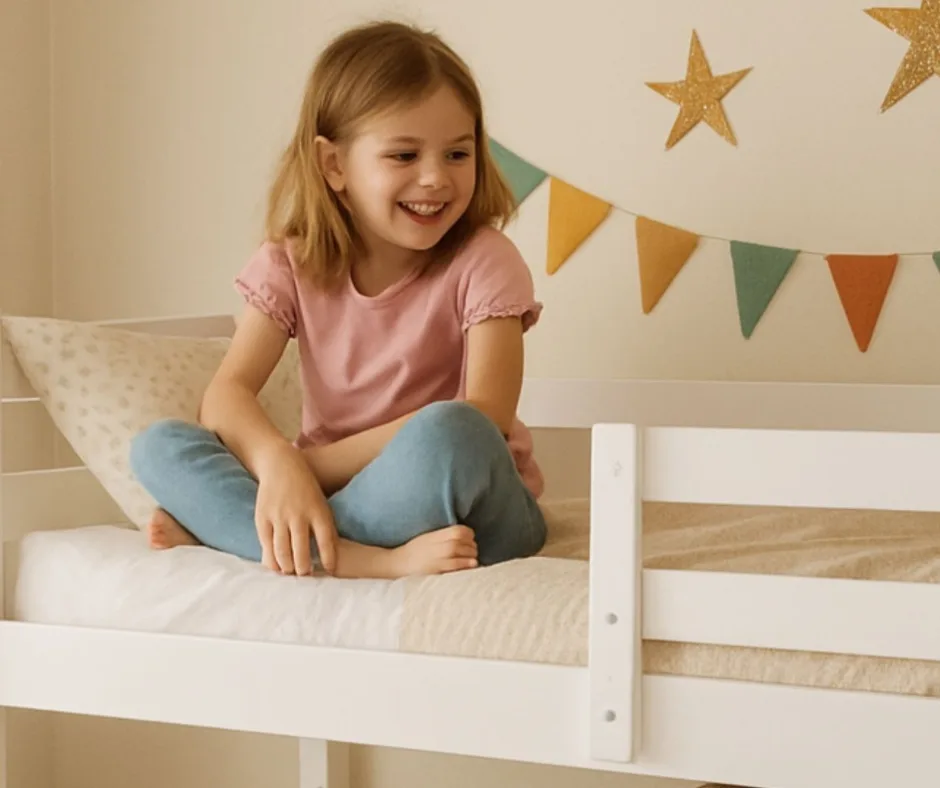
Kids’ bunk beds can help you maximize your bedroom space without compromising safety and comfort. They should have sturdy construction, safety guardrails, and hidden storage compartments for toys. Several styles are available, such as twin-over-twin, twin-over-full, loft, themed, and convertible.
What’s the Science Behind Back Pain and Sleep?
Kids grow up fast, and at some point, sharing a single bed or a cramped bedroom stops working.
Whether you're setting up a room for siblings, making space for a new addition to the family, or just giving your child their own dedicated sleep space, bunk beds are one of the smartest ways to do it. They free up floor space, give each kid their own spot, and make even a small room feel like it actually works.
What’s more, you’re not just thinking about style. You also have to consider whether it fits in the kids' bedroom, and if it’s safe enough for your little ones to use. Remember: safety always comes first.
That said, shopping doesn’t have to be so stressful. Here’s a complete guide on everything you need to know about buying bunk beds for kids, from extra features to long-term durability.
Key Safety and Extra Features to Look for in Bunk Beds for Kids
Kids climb, roll, and bounce, and a bunk bed takes all of that. Your bunk bed frame must then be solid and stable, and it should remain so with regular use. Here’s what you should look for before you decide:
-
Well-constructed frame: Your kids will climb the ladder several times a day. Solid wood and heavy-gauge metal, like the Metal Bed Frame Tips, won’t flex or wobble under your kids’ weight.
-
High guardrails: For top bunks, guardrails are arguably the most important safety feature. They should run the full length of the top bunk with openings no wider than 15 cm to keep kids from rolling off the bed.
-
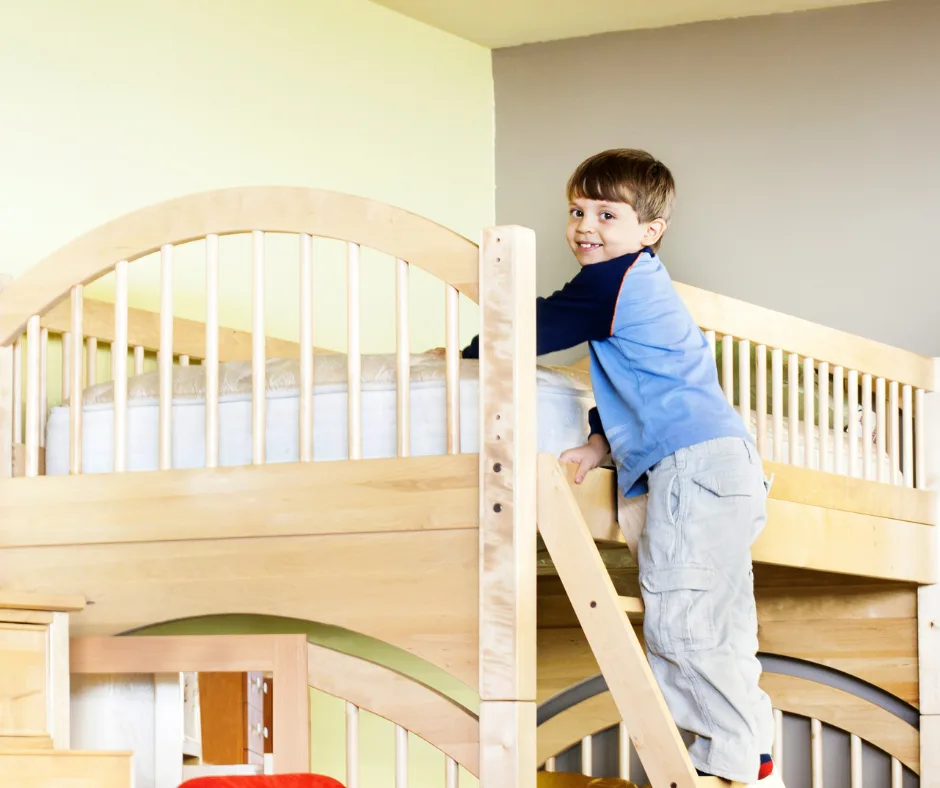
Secure ladder: A shifty, wobbly ladder is a major hazard. Built-in ladders with wide, flat rungs are the safest option, as they won’t shift during climbing.
-
Rounded edges: Sharp edges at your kids’ heights are a recipe for bumps and scrapes. Instead, look for frames with dull, round edges.
-
Weight limits: The top and bottom bunks have separate weight ratings. Always check the manufacturer’s instructions for both the top and bottom bunk.
-
Built-in storage: Drawers under the bottom bunk or shelves on the sides help keep shared rooms organized.
-
Underbed clearance: Make sure there’s enough room under the bottom bunk for storage or easy cleaning
Best Types and Styles of Bunk Beds for Kids
There’s more variety in bunk beds than most people expect. The right style depends on your kids’ ages, how they use the room, and how much floor space you’re working with.
Twin-over-Twin
If one of your kids needs more space than their siblings, a twin-over-full bunk bed with a top bunk smaller than the bottom one is a smart purchase. It’s still smaller than a full-over-full bunk bed but provides the adequate sleeping space your children need.
The Twin/Full Bunk Bed is a solid example. Not only is the lower half larger, but it also comes with extra storage drawers. You won’t have to worry about getting another chest or a dresser.
Loft Bed
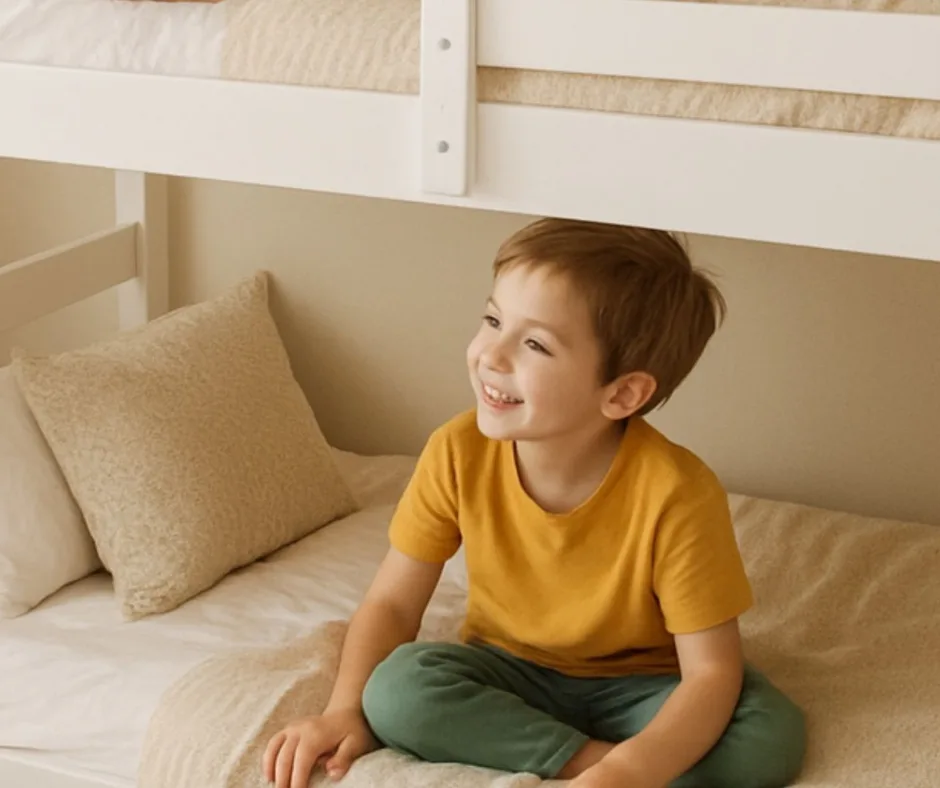
Loft beds use only the top bunk for sleeping, leaving the bottom bunk empty for a desk, a drawer, or even a lounging area. You can give your growing child a dedicated space for sleep and play without expanding their room.
Convertible Bunk Beds
You can transform convertible bunk beds into standalone beds. The top bunk can be removed when your kids start growing too big for their own bunks.
Tip: As your kids grow even bigger, it might be worth investing in a much larger or separate kids’ bed with a larger mattress. The Grey Queen Storage Bed is a cozy yet functional piece of furniture that offers a massive sleeping surface and hidden drawers.
FAQs About Bunk Beds for Kids
What age is appropriate for a top bunk?
Most manufacturers and pediatric safety guidelines recommend that children under six years old should not sleep on the top bunk. Younger children are more likely to roll during sleep and may not have the coordination to safely use the built-in ladder.
How much weight can a bunk bed hold?
Although weight limits vary, most standard kids' bunk beds can support between 90 and 140 kg per bunk. Always double-check the manufacturer’s specifications before buying to ensure your kids’ safety.
Can bunk beds be separated into two regular beds?
Many bunk beds are convertible. You can separate them into two standalone single or double beds as your kids grow. Look for a convertible model if you want a longer-lasting investment.
In Summary
-
Bunk beds are a smart choice for kids in a shared living space. They free up valuable floor space for playtime, desks, or extra storage.
-
Look for a solid frame with high guardrails, secure built-in ladders, and rounded edges. Also, always check the weight limits before buying
-
The five most popular styles are twin-over-twin, twin-over-full, loft, convertible, and themed.
-
Children under six years old should not sleep on the top bunk.
-
Convertible bunk beds are a good long-term investment since you can separate them into two standalone beds as your kids grow.
Find the Perfect Bunk Bed at Surplus Furniture
Whether your kids are sharing a small room or you just want to free up some floor space, Surplus Furniture has a wide selection of brand-name bunk beds at warehouse prices. From classic twin-over-twin designs to king beds with built-in drawers, we have options for every age, style, and budget.
Browse our bunk beds selection online or visit any of our 30+ stores across Canada to find the right bunk beds for your kids.