Choosing between a gas stove and an electric stove for your kitchen comes down to installation cost, monthly cost, cooking performance, and cleaning. Gas ranges offer instant, precise heat control, while electric ranges deliver easier installation, steadier baking, and simpler cleanup.
So, you're shopping for a new stove and are stuck on the big question: gas vs electric stove, which one is right for your kitchen? It's a decision worth taking your time on, since your next range is one you'll likely live with for years.
You don't need to be a serious home cook with big culinary ambitions to make the right call. At Surplus Furniture, we broke down all your considerations into installation, monthly cost, cooking performance, health, and maintenance, so the better fit becomes clear.
Check our verdict table below for a quick side-by-side comparison.
(This guide focuses on gas vs electric stoves specifically. If you're also curious about induction and dual-fuel options, our guide to different types of stoves breaks those down too.)
Gas vs Electric Stove: Installation Requirements
Before you fall in love with a specific range, check what your kitchen can actually support. Gas and electric ranges have very different installation needs.
What Electric Ranges Need
Electric ranges plug into a standard 220 or 240-volt outlet. Most homes built or renovated in recent decades already have this near the stove, keeping installation quick. Older electric models or panels may need an electrician to run a new line, but it's typically simpler than adding gas.
What Gas Ranges Need
Gas ranges require a dedicated gas line. If your kitchen doesn't already have one, a certified professional from the Technical Standards and Safety Authority (TSSA) must install it before your new range can be connected.
If natural gas isn't available, some gas ranges can use a conversion kit to run on propane instead. It’s worth asking about if a gas cooktop is calling your name.
How Much Does Gas Line Installation Cost?To put a number on it, TSSA-certified gas technicians in the GTA typically price a stove line hookup at $450 to $900, depending mainly on the distance from the existing gas meter or trunk line to the appliance. Longer runs, wall or floor crossings, and whether the existing line has enough spare capacity for another appliance can push costs toward the higher end. Pricing generally includes the permit, pipe and fittings, professional installation by a licensed gas technician, a pressure and leak test, and inspection, though patching drywall after wall penetrations isn't included. Since gas line work is legally required to be done by a TSSA-certified gas technician in Ontario, pricing tends to be more consistent than for other trades, but always get a firm quote during an in-home estimate before committing. |
|
Bottom line: without existing gas access, electric is typically faster and less disruptive to get up and running. |
Electric Stove versus Gas: Monthly Cost to Operate
Once installed, the ongoing cost to run your stove matters just as much as the upfront setup, though this is where things get less clear-cut.
Natural gas prices fluctuate with supply and demand, while electricity rates stay more predictable month to month. For many Canadian households, that stability makes budgeting a bit easier.
Per-hour cost estimates for electric vs. gas stoves vary by source and local utility rates, and datasets don't always agree on which is cheaper to run. Check your provider's current rates, especially if operating costs are your top priority.
Efficiency also factors in. Electric heat is generally more energy-efficient because it transfers heat directly to your cookware, while gas loses more heat to the surrounding air before it reaches your food.
Electric Stove or Gas Stove: Cooking Performance
Cooking on an electric stove vs. a gas stove is usually where the debate gets the most personal, and it really comes down to how you like to cook.
Stovetop Cooking
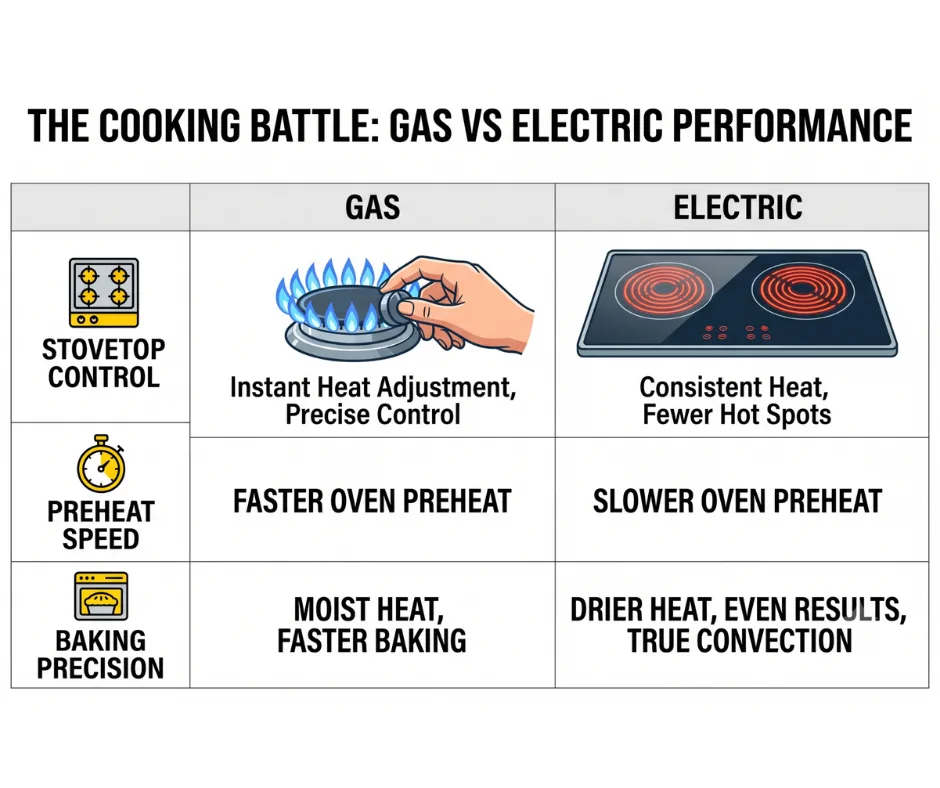
A gas range provides instant and precise temperature control. Turn the knob, and the open flame adjusts immediately, which is ideal for techniques like stir-frying or searing that call for rapid heat changes.
Gas burners also retain heat well and cool down faster than electric burners, giving you precise control over low heat and high heat in the same pan. A gas cooktop can also bring a pot of boiling water up to temperature slightly faster, and if you cook with cast iron or specialty cookware like a round-bottom wok, a gas stovetop tends to be the more forgiving choice.
Electric cooktops, especially newer smooth glass-ceramic models, have closed a lot of that gap. They provide consistent heat across a smooth surface using metal coils or radiant elements, helping avoid the hot spots that can appear with an open flame. Some electric models even include oval burners sized for griddles or larger pots.
|
Both gas and electric have their own advantages here, and fine-tuning between heat levels is simple on either once you're used to the controls. |
Oven and Baking Performance
Gas ovens preheat faster than electric ovens, which is handy on a weeknight when you want dinner in the oven sooner. But electric ovens offer drier heat for even baking results, and many electric ranges include true convection, where a fan circulates hot air throughout the oven for more thorough roasting.
Electric ovens also maintain a steadier temperature and respond more precisely when you adjust the temperature mid-bake, producing more even browning if you bake often.
|
Speed favours gas; precision favours electric. |
Do Chefs Prefer Gas or Electric Ranges?Many chefs prefer gas ranges for cooking techniques that rely on quick, visible heat adjustments, like charring vegetables or working a wok over high heat. That's part of why gas has long been considered something of a gold standard in professional kitchens. That said, plenty of home cooks have shifted toward electric in recent years for its consistency and easier cleanup. Which one chefs prefer often comes down to the specific dish rather than to one option being objectively better. |
Electric vs Gas Stove: Health and Air Quality
Cost and performance aren't the only factors worth weighing. Air quality is an increasingly important part of this conversation, especially for households with young children.
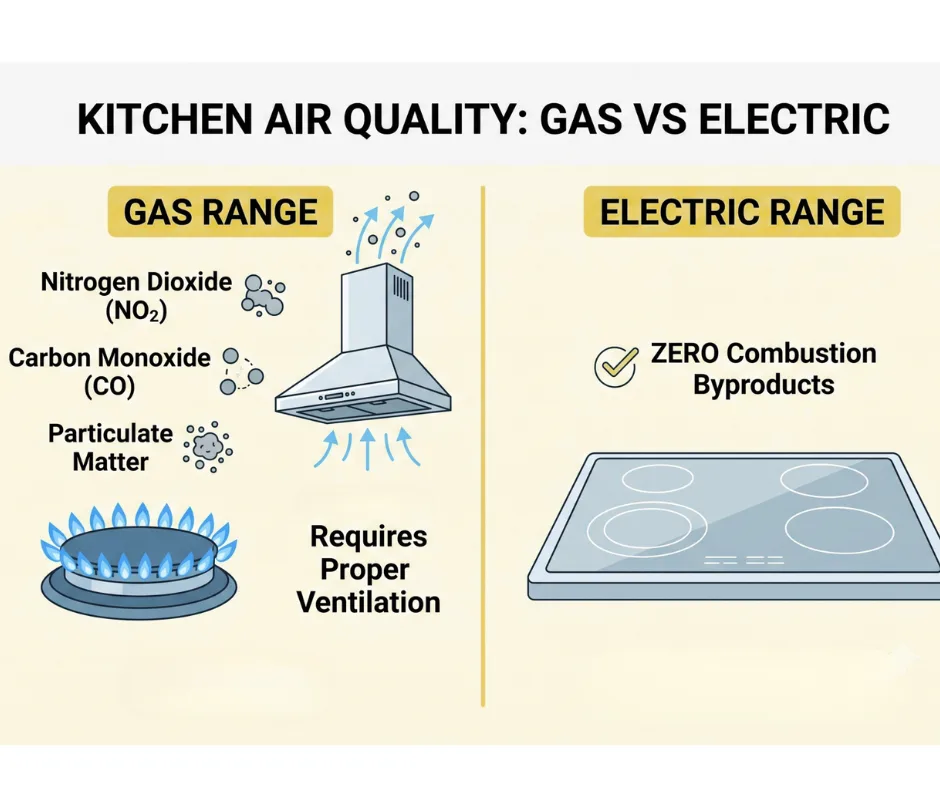
Gas ranges require adequate kitchen ventilation because they release combustion byproducts when burning natural gas, including nitrogen dioxide, trace amounts of carbon monoxide, particulate matter, and volatile organic compounds such as benzene and formaldehyde.
A properly vented range hood can meaningfully reduce these pollutants, so this is more a maintenance habit than a reason to switch if you already have and love a gas range.
Electric is generally considered safer on this front due to the absence of an open flame and combustion byproducts entirely. There's no line to run, no pilot light, and nothing extra to ventilate.
Gas vs Electric Stove: Maintenance and Cleaning
If easy cleanup is high on your list, electric wins this category.
Most electric cooktops have a flat, smooth surface that wipes clean in seconds, with no removable grates to deal with. One thing to watch for: a smooth top can scratch if you drag heavy cast-iron cookware across it, so use a gentle touch to keep it looking new.
Gas takes a bit more effort to clean. Removable grates and burner caps need to be lifted off and scrubbed separately, and grease can settle into the crevices around the burners. It's more hands-on than running a cloth over a flat surface.
Gas vs Electric Stove At a Glance
|
Factor |
Gas Range |
Electric Range |
|
Installation |
Needs a dedicated gas line |
Needs a 220 or 240-volt outlet |
|
Monthly cost |
Tied to fluctuating natural gas rates |
Tied to local electricity rates, more stable |
|
Stovetop control |
Instant, precise heat, faster cool down |
Even consistent heat, fewer hot spots |
|
Oven performance |
Preheats faster |
Holds temperature more precisely |
|
Air quality |
Requires proper ventilation |
No combustion byproducts |
|
Cleaning |
More effort, removable grates |
Quick wipe, smooth cooktop surface |
|
Best for |
Fast, hands-on cooking styles |
Low-maintenance, budget-friendly households |
FAQs About Electric vs Gas Ranges
Which is better, a gas or an electric stove?
Gas ranges give instant, precise heat control, while electric ranges offer easier installation, steadier baking, and simpler cleanup, so the better fit depends on your priorities as a cook.
What are the disadvantages of a gas cooktop?
Gas stoves need a dedicated gas line, require good ventilation for air quality, and take more effort to clean due to removable grates and burner caps.
Do chefs prefer gas or electric stoves?
Many chefs prefer gas ranges for techniques needing quick heat changes, but plenty of home cooks now choose electric ranges for their consistency and easier maintenance.
Is it healthier to have a gas or electric stove?
Electric stoves are generally considered healthier, since they don’t produce combustion byproducts like nitrogen dioxide that gas stoves can release into your kitchen air.
Key Takeaways
-
Electric ranges install faster and more affordably in most homes.
-
Gas ranges give instant, precise heat control; electric gives steadier baking.
-
Air quality favours electric, since gas needs proper ventilation.
-
Electric cooktops clean up faster than gas stove grates.
-
Running costs depend on your local gas and electricity rates.
-
Chefs are genuinely split on gas vs electric stove preference.
Which One Should You Choose?
Your answer to gas vs electric is clear now: if you already have gas access and love the instant control of an open flame, a gas range is a fantastic choice, especially if you often cook at high heat. If you're after simpler installation, steadier baking, easier cleanup, and better air quality, electric is likely your better match.
Whichever way you lean, you don't have to shop alone. Surplus Furniture carries a wide selection of gas and electric ranges from trusted, name-brand manufacturers like GE Appliances, all at affordable, factory-direct warehouse prices.
Ready to find the right range for your kitchen and budget? Shop name-brand stoves today and see the savings for yourself.
Here's what makes shopping with us easy:
-
Financing that works for you. On-the-spot financing with no payments for one year (OAC), so you can get cooking now and pay later.
-
Same-day delivery. Own your new range today with our same-day delivery service on all in-stock appliances.
-
Our iSave Best Price Guarantee. We're confident in our warehouse prices. See our iSave Best Price Guarantee.
-
30+ stores across Canada. Buy from one location and pick up closer to home. Find a Surplus Furniture store near you.
We're here to help transform your kitchen into a cozy, budget-friendly space you're excited to cook in.