What’s the biggest mistake people make when furnishing a small room? Assuming you can’t fit a sectional.
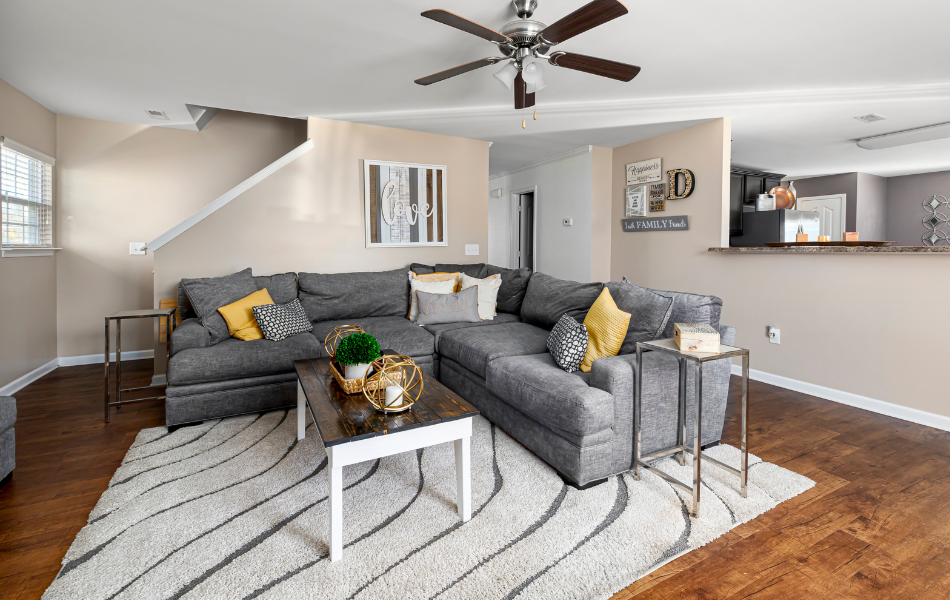
Yes, sectional sofas have a reputation as space hogs — something only large, open living rooms can handle. But the right sectional, arranged thoughtfully, can make your small space feel bigger and more functional than other small-space furniture combinations (looking at you, sofa-and-two-chairs combo).
The secret to efficiently arranging sectionals in small spaces is understanding proportion, placement, and flow. Think less about squeezing furniture in and more about finding the best layout to enhance your room’s natural strengths while maximizing comfort and style.
Start with the Right Measurements
Putting sectionals in small spaces can only ever go wrong if you choose the wrong size or shape for your room, which is sadly a common mistake. Many renters and homeowners only measure the spot where the sectional will go, but you need to consider the natural flow of the space.
Think about:
- The walking space around your sectional (leave at least three feet)
- Doorways and entry points
- Other furniture (coffee table, side tables, accent chairs, etc.)
The basic rule of thumb is to ensure your sectional sofa takes up no more than two-thirds of your room’s width to keep your space balanced and prevent it from feeling crowded.
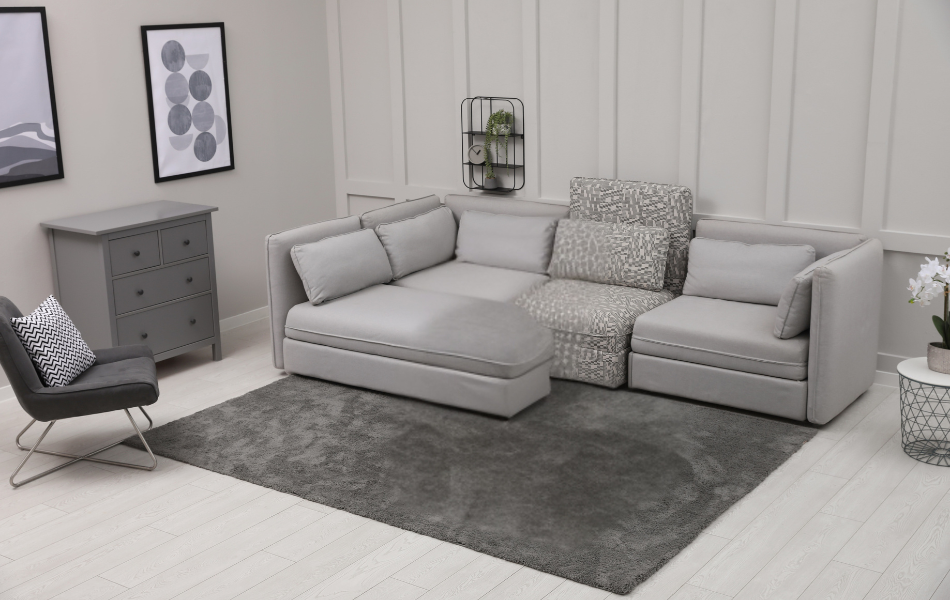
Pro tip: a small two-piece sectional often does the trick. If you want more flexibility, consider modular sectional sofas with individual pieces that you can mix and match.
Find the Right Shape for Your Living Space
The shape of your sectional greatly impacts how the room flows, feels, and functions. Here’s an overview of different sectional shapes and how they work in a tight space:
- L-shaped sectional — best for square or corner-based living rooms. Avoid in narrow rooms or spaces without usable corners.
- U-shaped sectional — best for wider small rooms or open layouts. Avoid in rooms with limited wall space or where it crowds the room.
- C-shaped sectional — best for wide rooms and loft spaces. Avoid in narrow or very small rooms.
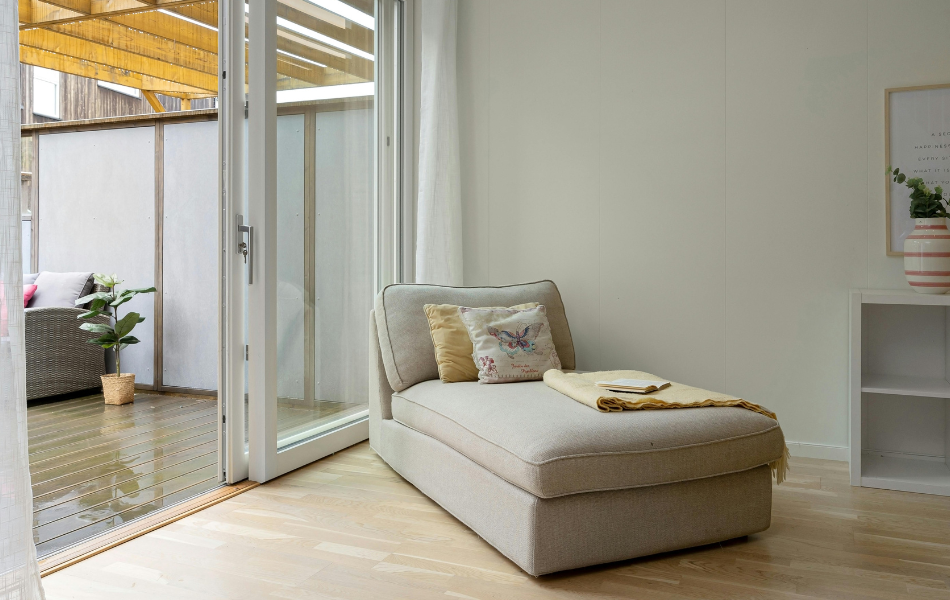
- Single chaise sectional — best for narrow or rectangular rooms with one open end (along walls). Avoid in tight spots near doorways.
- Modular sectional — best for irregular layouts, multipurpose living spaces, and rentals. Avoid in spaces where frequent rearrangement is impractical.
- Bumper-end sectional — best for small to medium open-plan rooms. Avoid in extra-small rooms.
- Curved sectional — best for open-concept rooms or rooms without sharp corners. Avoid in boxy or tight spaces (it doesn’t sit flush against walls and wastes space).
- Armless sectional — best for tight spaces with doorways nearby. Avoid in rooms that need defined boundaries.
Place It Strategically
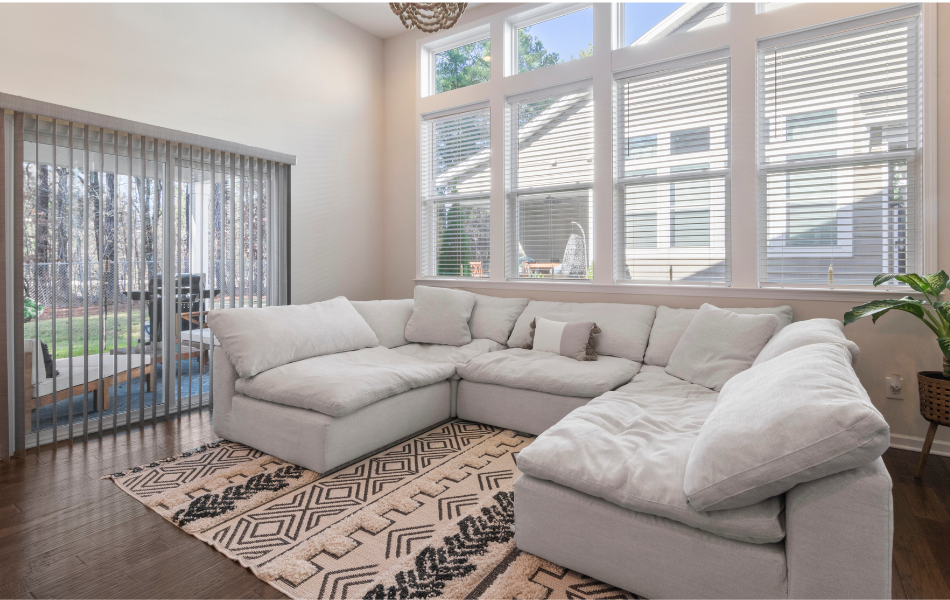
Where you place your sectional matters as much as which one you choose. Tuck it against a wall to maximize floor space, or use it to anchor an open-concept layout and define separate zones (living vs dining). Avoid placing it directly under a window unless the back is low enough not to block the view.
For very narrow rooms, position the sectional along the longer wall and let the chaise extend into the room rather than across it.
Pair With the Right Coffee Table
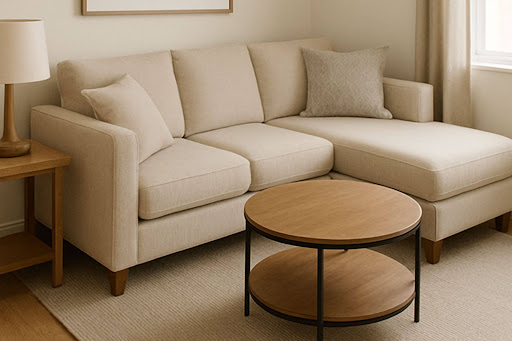
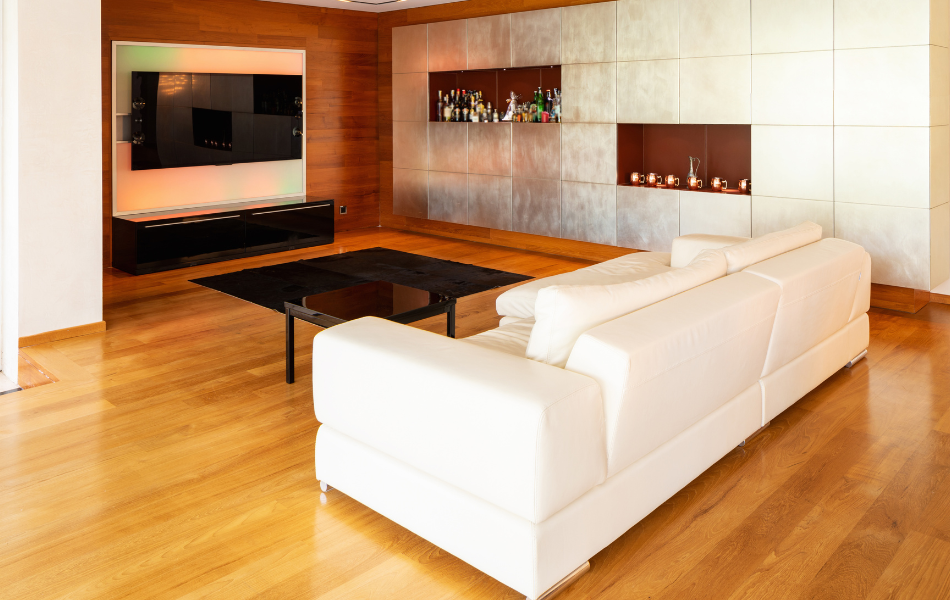
The coffee table you choose can make or break the layout. In small spaces, a slim, low-profile rectangular table works well in front of an L-shaped sectional. Round or oval tables soften the sharp lines of a corner sectional and improve flow when walking around them. Look for tables with built-in storage to maximize utility.
Choose Light Colours and Slim Profiles
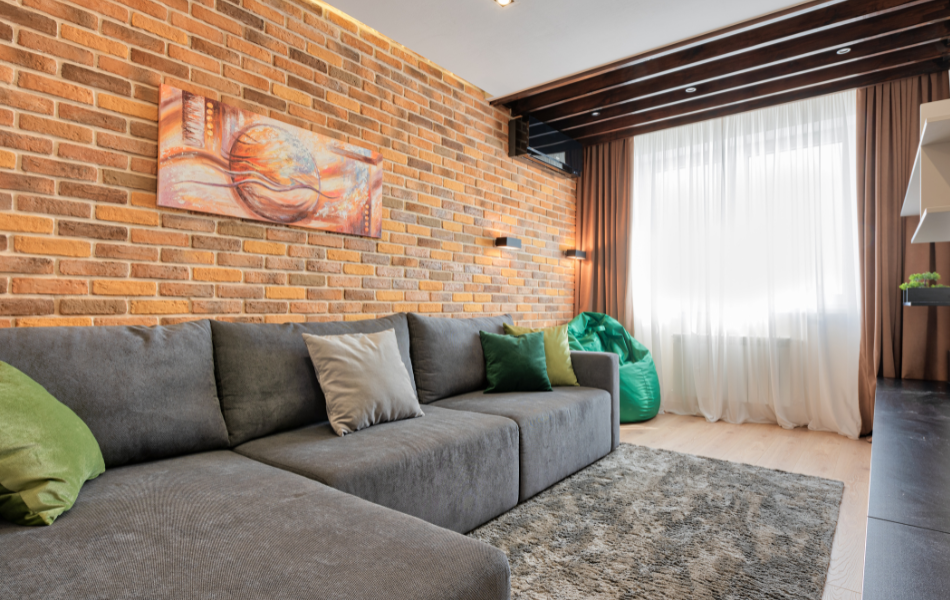
Lighter upholstery (greys, beiges, soft blues) reflects light and visually opens up a room. Slim, exposed legs lift the sectional off the floor, creating the illusion of more space. Avoid heavy, skirted bases — they ground the sectional visually and shrink the room.
Don’t Forget Storage
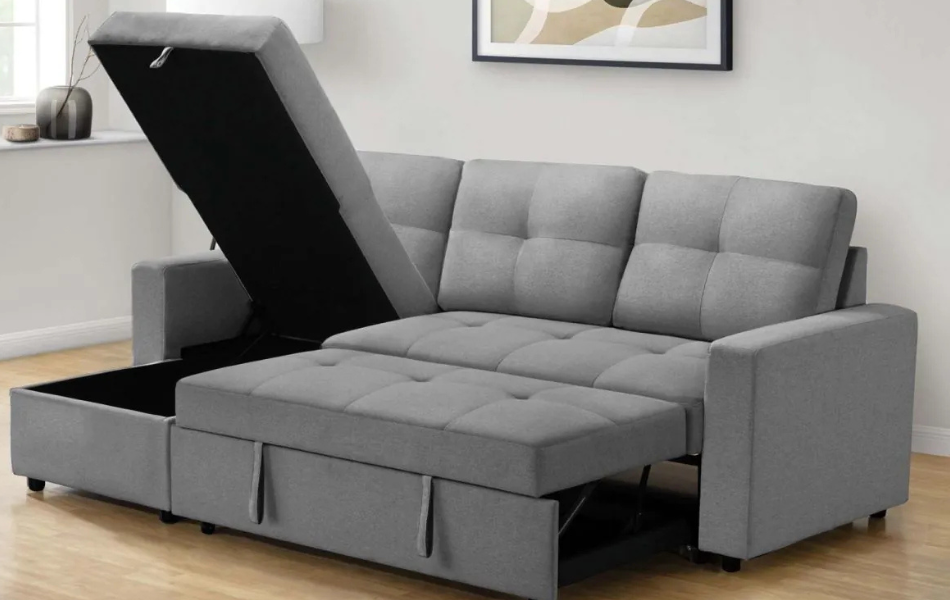
Sectionals with built-in storage compartments under the chaise or behind the seat back are a small-space dream. They double as entertainment-room storage for blankets, board games, and remotes — without adding extra furniture footprint to the room.
Find Your Perfect Small-Space Sectional at Surplus
From compact two-piece sets to modular sectionals you can reconfigure as your needs change, Surplus Furniture has small-space sectionals at warehouse prices. Visit your local store or shop online with same-day delivery on in-stock pieces.