You spend a third of your life in bed, so choosing the right mattress matters. Walking into a furniture store can be overwhelming — the “pocket coil vs innerspring” debate is a common point of confusion.
You don’t need a degree in sleep science to pick the perfect mattress. The best choice usually comes down to three things:
- How you sleep (side, back, stomach, or combination).
- Who you sleep with (light sleeper? restless partner?).
- What you can afford (without sacrificing quality).
Pocket Coil vs Innerspring at a Glance
Both use a coil system for support, but they’re built differently:
- Construction: pocket coil uses individually wrapped coils in fabric pockets; innerspring uses interconnected coils.
- Motion isolation: excellent on pocket coil; poor on innerspring (you’ll feel movement).
- Support: pocket coil is targeted and adaptive; innerspring is uniform and less contouring.
- Comfort: pocket coil contours to your body; innerspring feels bouncier and firmer.
- Temperature: innerspring is generally more breathable; pocket coil depends on comfort layers.
- Durability: pocket coil is more sag-resistant; innerspring may show wear faster in pressure spots.
- Price (queen): pocket coil $650–$999+; innerspring $350–$600+.
What Is a Pocket Coil Mattress?
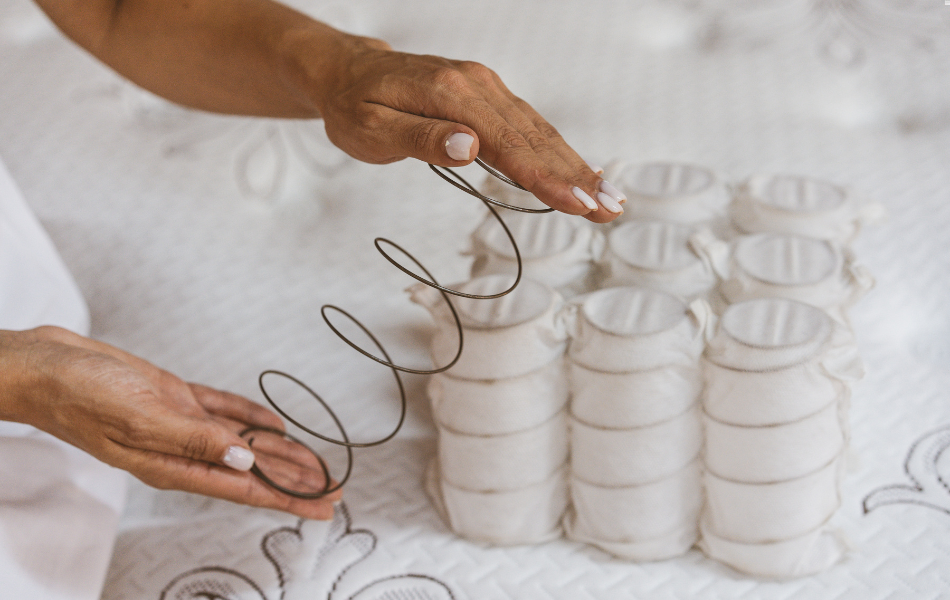
Pocket coil mattresses use individually wrapped coils, each enclosed in its own fabric pocket. When you lie down, only the coils directly under your body compress — surrounding coils stay still. The result is “point elasticity”: targeted support that adapts to your body’s curves and weight distribution.
The construction of a pocket coil mattress offers better motion isolation and pressure relief than traditional mattresses, keeping your spine aligned regardless of sleep position.
Read more: Understanding mattress coil counts
Pros: superior motion isolation; great pressure relief for joints; quieter (no squeaking); longer lifespan; good airflow between fabric pockets.
Cons: usually more expensive; may retain more heat depending on materials; heavier and harder to move.
Pick a pocket coil if you:
- Share your bed.
- Are a side or combination sleeper.
- Need cushioning at hips and shoulders.
- Want a longer-lasting investment.
- Don’t mind spending a bit more for comfort.
Staff pick: Windham Pocket Coil Mattress
What Is an Innerspring Mattress?
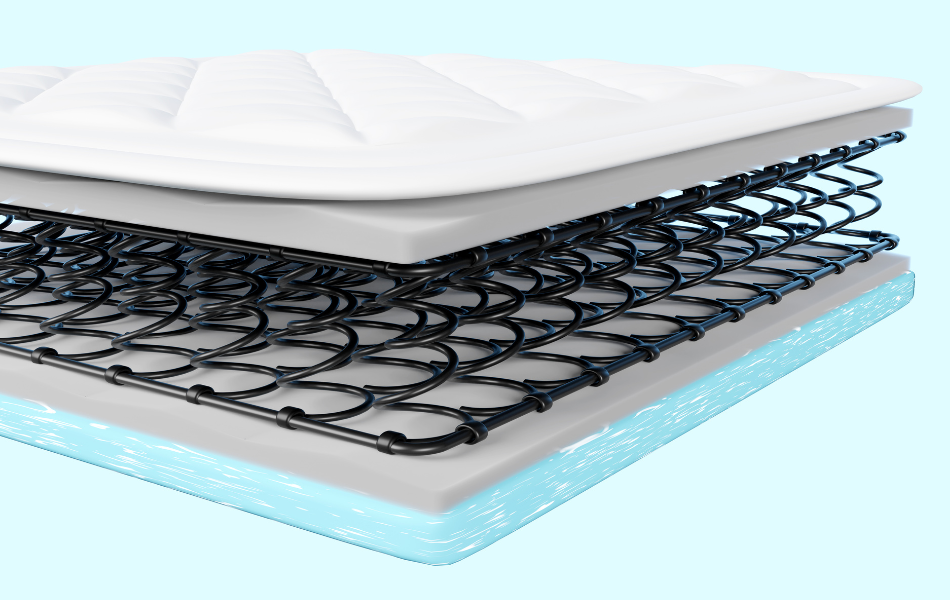
A traditional innerspring uses interconnected coils as the support unit. Unlike pocket springs that work independently, innerspring coils function as a unit, creating that familiar bouncy feel. They tend to be louder than pocket springs — not ideal for sensitive sleepers — but certain coil types like offset coils are designed to limit motion transfer and squeaking.
Common innerspring coil types:
- Bonnell coils: hourglass-shaped with narrow centres and wider tops/bottoms — firm, even support.
- Offset (coil-in-coil) coils: hourglass-shaped with squared sides — stronger pushback, less motion transfer and noise.
- Continuous wire coils: a single long wire twisted into a series of S-shaped coils — more conforming.
Pros: affordable and widely available; firm support for back/stomach sleepers; cooler sleep with better airflow; lightweight and easy to move.
Cons: motion transfer (you’ll feel your partner move); less contouring; may sag or develop pressure points over time.
Pick an innerspring if you:
- Are a back or stomach sleeper.
- Sleep hot and need maximum cooling.
- Prefer a traditional bouncy feel.
- Are on a tighter budget but want quality.
- Sleep alone or with a heavy-sleeping partner.
Staff pick: Nottingham Prime Tight Top Firm Queen Mattress
Find Your Mattress at Surplus
Choosing between pocket coil and innerspring comes down to your sleep style, preferences, and budget. At Surplus Furniture we offer both at factory and warehouse prices, with layaway, on-the-spot financing, weekly promotions, same-day delivery on in-stock items, and competitive price-matching through iSave. Visit your nearest Surplus Furniture store or browse online.